When Your Commercial Construction Project Stalls: A Developer's Guide to Rescue Financing
Every commercial construction project begins with a plan — a budget, a schedule, a lender, and a vision. But somewhere between breaking ground and cutting the ribbon, thousands of projects across the United States run into a gap between what was planned and what reality delivered. Material costs spike. A key subcontractor walks. The lender's draw schedule tightens. A permit stalls in municipal red tape. And suddenly the machines go quiet on a site that still has months of work ahead of it and a loan that was not structured to absorb the unexpected. In 2026, with nearly $936 billion in commercial real estate loans maturing and banks pulling back from construction exposure at an accelerating pace, the gap between a stalled project and a finished one often comes down to whether the developer has access to the right rescue strategy before the situation becomes irreversible.
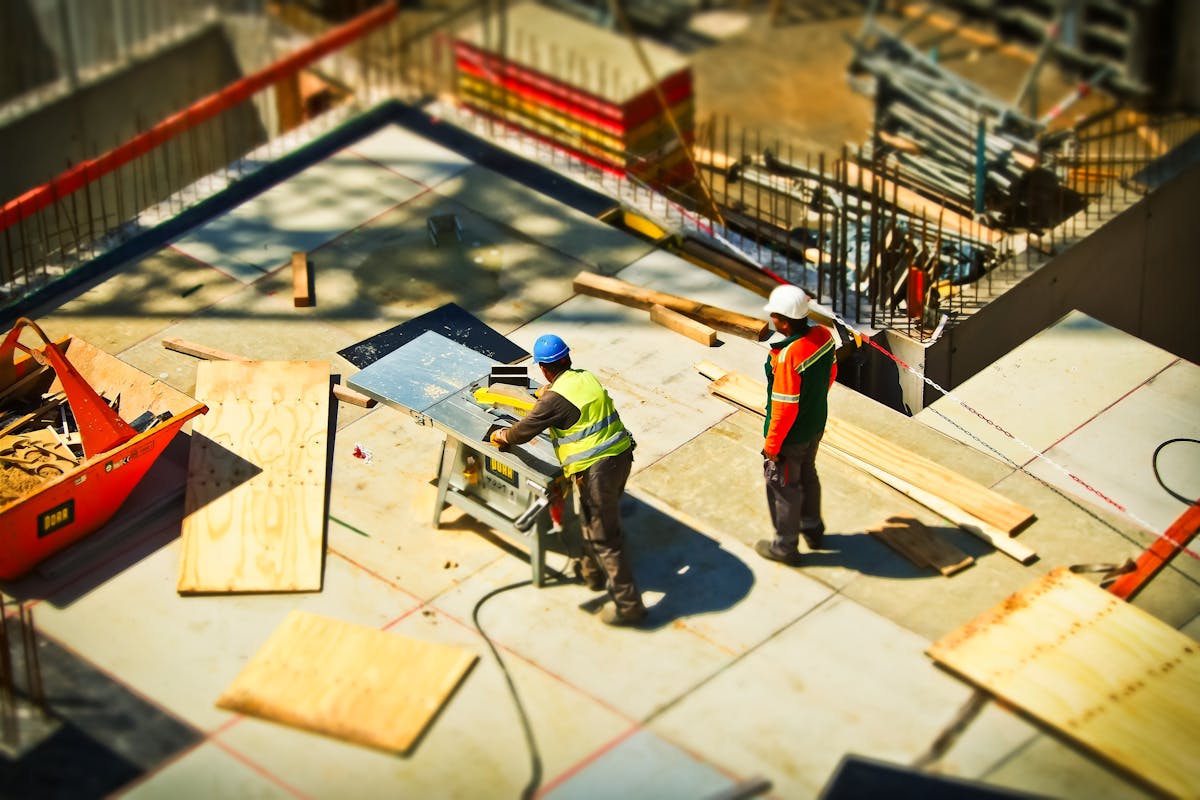
Stalled commercial construction projects in 2026 need a structured rescue financing plan — not just more time. Photo: Pexels (Free License)
Why Construction Projects Fail — and Why It Is Rarely the Market
The data on commercial construction failure is more instructive than most developers expect. Research from Harvard and Goldman Sachs shows that construction sector productivity has actually declined since 1965 — falling approximately 0.6 percent annually even as the broader economy grew at 1.6 percent per year over the same period. That productivity gap means that every delay, every scope change, and every draw dispute costs more in real terms today than it would have cost on the same type of project a generation ago. The compounding effect of inefficiency at scale is one reason why 83 percent of construction company failures trace back to budget mismanagement and macro financial issues — not market conditions, not bad locations, and not failed demand.
What this means practically for developers is that a stalled project is almost never unsalvageable on its fundamentals. The underlying demand that justified the original investment decision is typically still there. What has broken down is the capital structure — the specific combination of debt, equity, draw timing, and lender relationship that was designed for a different set of cost assumptions than the ones the project now faces. Understanding this distinction is the first step toward building an effective rescue strategy rather than simply waiting for the bank to make the next move. The most detailed framework available for navigating this exact situation is the Ground Up Construction Financing Rescue Plan — a structured approach to identifying the gap, matching it to the right capital tool, and getting the site moving again before permits expire or the lender accelerates the loan.
The Moment Banks Stop Answering: Understanding Lender NPV Analysis
When a construction project hits a significant cost overrun or schedule delay, the developer's lender is simultaneously running its own analysis — one that the borrower rarely sees but that determines everything about what options remain available. Banks use a Net Present Value model to compare four possible paths: selling the distressed note to a third party at a discount, initiating foreclosure proceedings and recovering the land at auction, restructuring the debt through an A/B note split or term extension, or accepting a deed-in-lieu arrangement that returns the property without the cost of formal foreclosure.
The critical insight here is that lenders do not automatically prefer foreclosure — they prefer whichever path returns the most value net of costs and time. A developer who arrives at the lender's door with a credible recovery plan, a revised budget, a qualified contractor team, and evidence of continued market demand for the completed project is in a far stronger negotiating position than one who simply asks for more time without supporting data. Many banks have reached 198 percent of their internal capital concentration limits for commercial real estate — which is precisely why they are reluctant to extend additional funds. But a loan modification, an A/B restructure, or a transition to private bridge capital all represent paths that serve the lender's interests without requiring them to advance new money, making them genuinely viable in most distressed construction situations. The Federal Reserve's rate environment has made this calculus even more complex in 2026, as higher discount rates compress the NPV advantage of extended workout timelines relative to faster resolution strategies.
Key Insight: Developers who initiate rescue conversations with their lenders proactively — before a formal default is declared — consistently achieve better restructuring outcomes than those who wait for the bank to make the first move. The 30 to 60 days before a technical default is the highest-leverage window available to any distressed construction borrower.
Bridge Loans: Stopping the Clock Before Permits Expire
For projects where the lender relationship has broken down entirely and the developer needs immediate capital to maintain the site, preserve subcontractor relationships, and prevent permit expiration, a construction bridge loan is typically the fastest and most effective first tool. Unlike conventional bank construction loans that require months of underwriting, committee approvals, and documentation packages built around personal tax returns, private construction bridge loans are underwritten primarily on the asset's projected completion value — known as the After-Repair Value or ARV — and the developer's track record of completed projects.
Closing timelines for private construction bridge loans typically run 7 to 14 days from term sheet acceptance — fast enough to prevent the permit expirations and subcontractor departures that accelerate a project's deterioration from stalled to unsalvageable. Draw funding can follow within 24 to 72 hours of inspection approval, keeping crews on site and material deliveries on schedule. Interest-only payment structures keep carrying costs manageable during the rescue period, and most programs offer extension options for the unpredictable timelines that come with any distressed project recovery. For developers who need to understand how SBA 504 financing fits as a permanent exit once the project reaches stabilization — offering up to 90 percent leverage at 25-year fixed rates — the bridge-to-permanent two-step is one of the most reliable rescue pathways available for owner-occupied commercial construction.

A credible revised budget and completion timeline are the two most important documents in any commercial construction rescue conversation. Photo: Pexels (Free License)
Mezzanine Capital and the Art of Filling the Stack
Not every stalled construction project needs a complete lender replacement. In many cases, the senior lender is willing to hold its position but contractually cannot advance additional funds beyond what was originally committed — a situation that leaves the project with a defined capital gap that mezzanine financing is specifically designed to fill. Mezzanine capital sits between the senior construction loan and the developer's equity in the capital stack, earning a preferred return — typically 12 to 18 percent — in exchange for subordinated risk exposure.
Because mezzanine financing does not typically take a first mortgage position on the property, it can often be structured without triggering the intercreditor restrictions that a second mortgage would create in most senior loan agreements. This makes it a particularly clean solution for projects where the senior lender is cooperative but simply cannot advance more money under existing regulatory concentration limits. The key to successfully introducing mezzanine capital into a distressed construction situation is presenting a capital stack that clearly demonstrates the path to project completion, stabilization, and exit — giving the mezzanine provider the confidence that their subordinated position will be repaid from a finished, income-producing asset rather than an extended workout. Developers managing multiple assets simultaneously should also understand how non-recourse CMBS financing can protect their broader portfolio during a rescue, ensuring that one troubled project does not create cross-collateral exposure that threatens stabilized assets.
The Recovery Checklist Every Developer Needs Before Calling a Rescue Lender
Rescue lenders — whether bridge, hard money, mezzanine, or private equity — are evaluating the same fundamental questions in every distressed construction transaction: What is the project's realistic cost to complete? What is its credible value at completion? Who is qualified to actually finish the work? And what is the specific exit strategy that retires the rescue capital within the loan term? Arriving at a rescue lender conversation with clear, documented answers to all four questions dramatically accelerates the approval process and improves the terms available.
- A current cost-to-complete analysis prepared by a qualified independent estimator
- Updated ARV appraisal reflecting current market conditions in the project's submarket
- Contractor résumé showing a minimum of three comparable completed projects
- Active building permits with confirmed remaining validity periods
- A revised project schedule with milestone dates and contingency buffers built in
- A minimum of six months of projected carrying costs held in a dedicated reserve account
The commercial lending market in 2026 offers more rescue capital options for distressed construction than most developers realize — from no-doc and lite-doc private bridge programs that prioritize the asset over the borrower's tax history, to USDA Business and Industry loans for projects in qualifying rural markets, to specialized programs for medical office, data center, and multifamily construction that reflect the sectors driving the strongest new demand. The Mortgage Bankers Association's 2026 commercial outlook confirms that private capital sources are actively filling the gap left by retreating regional banks — providing a functioning rescue lending market for developers who know where to look and how to present their deals.
Bottom Line: A stalled construction project is not a failed project — it is a project that needs a different capital structure than the one it started with. The $936 billion maturity wall of 2026 is real, and bank pullback from construction lending is accelerating. But private bridge capital, mezzanine financing, SBA permanent programs, and experienced correspondent lenders have all stepped into the space that conventional banks have vacated. The difference between a project that finishes and one that forecloses is almost always the developer's willingness to pursue the rescue strategy early, honestly, and with a credible plan in hand.


Comments
Post a Comment